

Your Success, Our Mission!
6000+ Careers Transformed.
Explanation
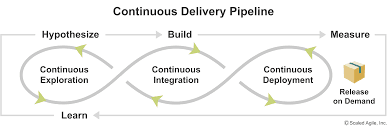
Continuous Delivery (CD) is the practice of ensuring that software is always in a releasable state. After code passes continuous integration, it moves through automated stages such as packaging, configuration validation, and acceptance testing. The key idea is predictability: releases are low-risk, repeatable, and routine. Release management in CD focuses on versioning, approvals, environment consistency, and rollback strategies. By automating release preparation while keeping a manual approval gate for production, teams gain control without slowing down delivery.
Table
| Element | Purpose |
|---|---|
| Artifacts | Versioned build outputs |
| Environments | Dev, test, staging, prod |
| Approval Gates | Controlled promotion |
| Rollback | Fast recovery |
| Release Notes | Change visibility |
Example
A team builds an application artifact after successful CI. The artifact is automatically deployed to testing and staging environments. Automated acceptance tests validate functionality. A release manager approves promotion to production. If an issue is found, the previous version is redeployed instantly. Releases become predictable and stress-free.
Use Cases
• Enterprise release management
• Regulated environments
• Stable production deployments
• Controlled software delivery
Explanation
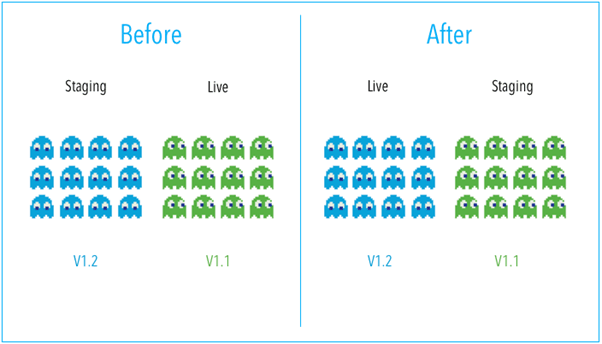
Continuous Deployment extends Continuous Delivery by automatically deploying every validated change directly to production without manual approval. This approach relies heavily on automation, monitoring, and fast rollback mechanisms. Common deployment strategies include rolling deployments, blue-green deployments, and canary releases. These strategies minimize downtime and risk by gradually shifting traffic or maintaining parallel environments. Continuous Deployment is most effective when combined with strong test coverage, observability, and a culture that embraces small, incremental changes.
Table
| Strategy | Description |
|---|---|
| Rolling | Gradual instance updates |
| Blue-Green | Two parallel environments |
| Canary | Partial traffic exposure |
| Feature Flags | Runtime control |
| Rollback | Automated recovery |
Example
A SaaS platform uses canary deployments for new features. A small percentage of users receive the update first. Monitoring dashboards track error rates and latency. If metrics remain healthy, traffic is gradually increased. If issues appear, the deployment is rolled back automatically. Users experience minimal disruption while innovation continues rapidly.
Use Cases
• High-velocity SaaS platforms
• Microservices architectures
• Cloud-native applications
• Zero-downtime deployments
Top Tutorials
Related Articles

 in Bengaluru, India


All Courses (6)
Master's Degree (2)
Fellowship (2)
Certifications (2)


 Continuous Delivery Concepts


 in Bengaluru, India