

Your Success, Our Mission!
6000+ Careers Transformed.
Explanation
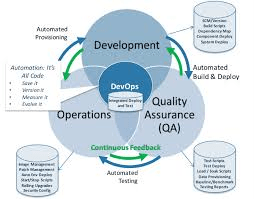
DevOps is a set of practices, cultural philosophies, and technical approaches that aim to unify software development (Dev) and IT operations (Ops). The core objective of DevOps is to shorten the software development lifecycle while delivering high-quality, reliable software continuously. DevOps emphasizes automation, collaboration, feedback loops, and shared responsibility across teams. Instead of treating development and operations as separate silos, DevOps aligns them around common goals such as faster delivery, system stability, and customer satisfaction. Automation plays a central role by reducing manual errors and enabling repeatable, predictable processes.
Table
| Aspect | Traditional Approach | DevOps Approach |
|---|---|---|
| Teams | Separate Dev and Ops | Collaborative teams |
| Releases | Infrequent, manual | Frequent, automated |
| Feedback | Delayed | Continuous |
| Failures | High impact | Small, recoverable |
| Automation | Minimal | Extensive |
Example
A development team builds new features while operations manages deployments manually. Releases are slow and risky, often causing downtime. After adopting DevOps practices, the team introduces automated builds, tests, and deployments. Developers and operations collaborate on deployment scripts. Small changes are released frequently. Issues are detected early through monitoring. The system becomes more stable while delivery speed increases significantly.
Use Cases
• Continuous software delivery
• Faster feature releases
• Reduced deployment failures
• Improved collaboration between teams
Explanation
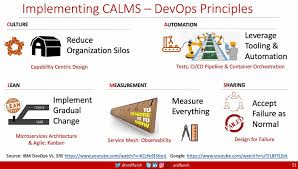
DevOps culture is commonly explained using the CALMS model, which stands for Culture, Automation, Lean, Measurement, and Sharing. Culture focuses on collaboration, trust, and shared ownership. Automation reduces manual effort and errors across the delivery pipeline. Lean principles emphasize eliminating waste and optimizing flow. Measurement ensures decisions are driven by metrics such as deployment frequency and failure rates. Sharing promotes knowledge exchange, transparency, and continuous learning. Together, these values create an environment where teams can innovate rapidly without sacrificing reliability.
Table
| CALMS Element | Meaning |
|---|---|
| Culture | Collaboration and ownership |
| Automation | Tool-driven workflows |
| Lean | Efficient processes |
| Measurement | Metrics-based decisions |
| Sharing | Knowledge exchange |
Example
An organization struggles with slow releases and frequent production issues. By adopting the CALMS model, teams break down communication barriers and automate repetitive tasks. Deployment metrics are tracked to identify bottlenecks. Lessons learned from incidents are shared openly. Over time, release cycles shorten, system reliability improves, and team morale increases. DevOps culture becomes embedded across the organization.
Use Cases
• Large-scale DevOps transformations
• High-performing engineering teams
• Continuous improvement initiatives
• Metrics-driven software delivery
Top Tutorials
Related Articles

 in Bengaluru, India


All Courses (6)
Master's Degree (2)
Fellowship (2)
Certifications (2)


 What is DevOps


 in Bengaluru, India