

Your Success, Our Mission!
6000+ Careers Transformed.
Microsoft Azure is a comprehensive cloud computing platform developed by Microsoft that enables individuals and organizations to build, deploy, and manage applications and services through a global network of Microsoft-managed data centers. In 2026, Azure is one of the three dominant cloud platforms globally, widely adopted for enterprise workloads, startups, government systems, AI platforms, and large-scale data solutions.
Azure provides infrastructure, platforms, and software services that eliminate the need for organizations to invest heavily in physical hardware. Instead of maintaining servers, networks, and storage on-premises, Azure allows users to consume computing resources on demand, scale instantly, and pay only for what they use. This makes Azure a foundational skill for modern software engineers, system architects, DevOps engineers, data professionals, and IT administrators.
Cloud computing is a model for delivering computing service–s—including servers, storage, databases, networking, software, analytics, and intelligence—over the internet. Rather than owning and maintaining physical infrastructure, users rent resources from cloud providers who handle infrastructure management, availability, and security at scale.
Cloud computing fundamentally changes how systems are designed. Applications are no longer constrained by fixed hardware limits and can dynamically adapt to traffic, workload, and business growth. This elasticity, combined with global reach and automation, is the core reason cloud platforms like Azure dominate modern IT.
Explanation
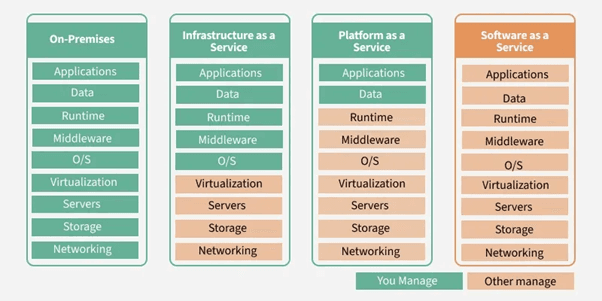
Cloud computing is built on several foundational principles: abstraction, virtualization, elasticity, and shared responsibility. Resources such as servers and storage are abstracted into virtual components that can be provisioned programmatically. Virtualization allows multiple customers to share the same physical hardware securely and efficiently. Elasticity enables systems to scale up or down automatically based on demand. The shared responsibility model defines which security and management tasks are handled by the cloud provider and which remain with the customer.
Cloud services are typically delivered using three primary service models. Infrastructure as a Service (IaaS) provides raw computing resources like virtual machines and networks. Platform as a Service (PaaS) abstracts infrastructure management and allows developers to focus on application logic. Software as a Service (SaaS) delivers fully managed applications accessible through browsers or APIs.
Table
| Cloud Model | Responsibility of User | Example |
|---|---|---|
| IaaS (Infrastructure as a Service) | Operating System, runtime, applications, and data | Virtual Machines |
| PaaS (Platform as a Service) | Applications and data | Web Apps |
| SaaS (Software as a Service) | Usage only | Email Services |
Image Placeholder
Example
A startup building a mobile app uses cloud computing to host its backend services. Instead of buying servers, the team provisions virtual machines on demand. During peak usage hours, the system scales automatically to handle traffic. At night, unused resources are released, reducing costs. The team focuses on improving the app rather than managing hardware. Security updates for physical servers are handled by the cloud provider. This allows rapid growth with minimal operational overhead.
Use Cases
• Hosting web and mobile applications
• Running enterprise ERP and CRM systems
• Big data processing and analytics
• Backup, disaster recovery, and archival storage
• AI and machine learning workloads
Microsoft Azure is Microsoft’s public cloud platform that delivers more than 200 services across computing, storage, networking, databases, AI, analytics, IoT, and security. Azure is designed to support both cloud-native applications and traditional enterprise workloads, making it especially popular among organizations transitioning from on-premises infrastructure.
Azure integrates deeply with Microsoft technologies such as Windows Server, Active Directory, SQL Server, and development tools, while also fully supporting open-source platforms, Linux, containers, and modern programming frameworks. Its global footprint allows applications to be deployed close to users for low latency and high availability.
Explanation
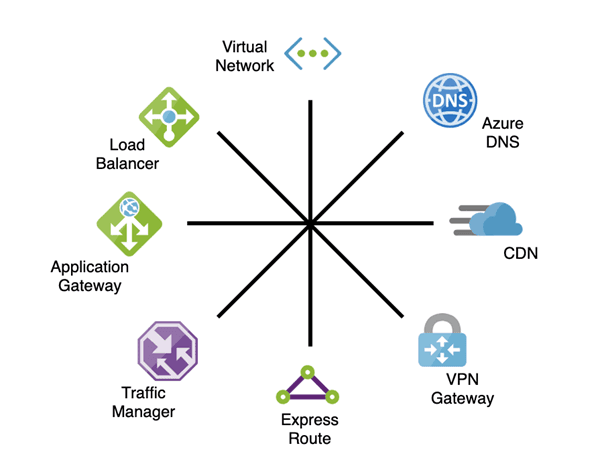
The Azure platform is organized into logical service categories. Compute services provide processing power through virtual machines, containers, and serverless functions. Storage services manage unstructured and structured data with high durability and redundancy. Networking services enable secure communication between resources and users globally. Identity and security services manage authentication, authorization, and threat protection. Management tools allow monitoring, automation, and cost control.
Azure operates on a region-based architecture. Each region consists of multiple data centers, and availability zones within regions provide fault tolerance. Azure Resource Manager (ARM) acts as the control plane, enabling consistent deployment, governance, and lifecycle management of resources through templates and APIs.
Table
| Azure Category | Purpose | Example Service |
|---|---|---|
| Compute | Run applications | Azure Virtual Machines |
| Storage | Store data | Azure Blob Storage |
| Networking | Connect resources | Azure Virtual Network |
| Security | Protect resources | Microsoft Entra ID |
| Management | Monitor and govern | Azure Monitor |
Image Placeholder
Example
An e-commerce company uses Azure to host its platform. Virtual machines run the backend services, blob storage stores product images, and a managed database stores customer data. Azure networking connects services securely, while monitoring tools track performance and uptime. As traffic increases during sales events, Azure automatically scales resources. The company pays only for the additional capacity used during peak periods.
Use Cases
• Enterprise application hosting
• Hybrid cloud integration with on-premises systems
• SaaS product development
• High-availability global applications
• Secure identity and access management
Top Tutorials
Related Articles

 in Bengaluru, India


All Courses (6)
Master's Degree (2)
Fellowship (2)
Certifications (2)


 What is Cloud-Computing


 in Bengaluru, India